2026-03-31
The Provençal Mas
An emblem of Provence's rural heritage, the mas embodies an authentic way of life between land and sun. Discover the history and characteristics of this traditional Provençal home.
What is a Provençal mas?
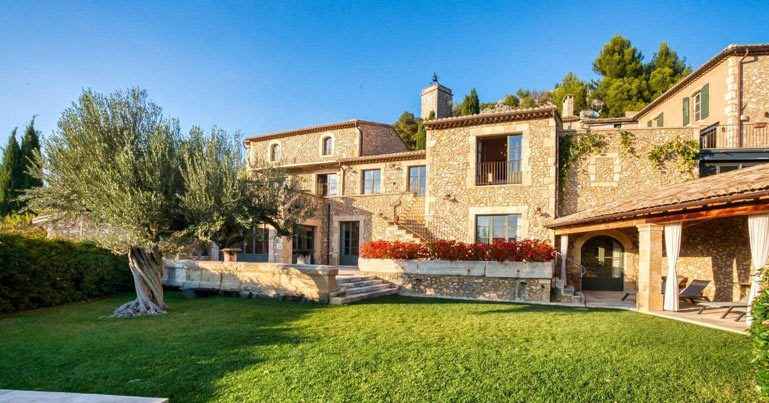
A Provençal mas is a building characteristic of Provence, a traditional farmhouse, a farming family's country residence. It is a rural, age-old construction built from stone, which gives it much of its charm.
The term "mas" has Provençal origins. It can refer to an agricultural dwelling and the whole complex of farm buildings, along with outbuildings such as the garden or orchard. In its day, the mas served as a dwelling but was also an agricultural building used for growing wheat, fruit and vegetables, and for keeping farmyard animals.
Not every Provençal farmhouse is a mas; indeed, mas have very specific architectural features and should not be confused with Provençal bastides, which were used as residences for the bourgeoisie.
How to recognise a Provençal mas
A Provençal mas can be recognised by its architectural characteristics:
- Its architectural base is a rectangular block with a two-sided pitched roof, ranging in size from 150 to 1,000 sqm.
- It is often built near a water source.
- It has a small square courtyard at its centre.
- It is generally south-facing to provide shelter from the Mistral wind.
- It has no openings on its north-facing façade.
- Windows are narrow on the other façades to protect the dwelling from both heat and cold.
- A Provençal mas is built of stone, originally bound together with a mixture of earth and lime.
Provençal mas can be found almost everywhere in Provence, though they are especially common in the Camargue, the Luberon and the Var. A large number are situated along the Rhône, which was an important water reserve in Provence during the 18th century.
There are, in fact, two major forms:
- The Luberon mas: Rectangular in shape, it has an upper floor and a garden level. The upstairs corridor runs along the north-facing façade, with the bedrooms on the south side.
- The Camargue mas: Resembling a hacienda, it features generous volumes with white walls and an inner courtyard. It takes the form of a U shape, dividing living quarters from stables.
Often made up of several buildings constructed over time as the estate grew, the Provençal mas is characterised by fine proportions and its wide, south-facing openings.
Good reasons to buy a Provençal mas
The Provençal mas, once a simple farm building, is highly sought after today as a holiday residence and has captured many a buyer's imagination. Its air of an old country building and its noble materials give it an undeniable charm that appeals to a growing number of buyers, just as with castles in Provence, hôtels particuliers or houses on a golf course.
This traditional dwelling, with its sun-drenched stonework and generous capacity to welcome family and friends, has the charm of an old building where it is good to gather together. Moreover, since its architecture is largely shaped by the climate and adapted to its uses, the Provençal mas belongs to those bioclimatic constructions, meaning a building method designed to last over time and to provide lasting comfort to its occupants all year round.
Renovating a Provençal mas: heritage worth preserving
The mas is part of southern France's cultural heritage; some have today been refurbished to modern tastes, while others remain authentic yet uninhabitable, and are therefore in need of renovation.
The major challenge when renovating this type of property is to preserve this heritage while bringing it up to date, without weakening the structure of a dwelling that is, in most cases, a century old, and without altering its character.
It is important to retain the original materials while modernising the property. Renovating a mas to create a true haven of peace is a project that takes time to mature, and one that also calls for the help and advice of a specialist firm, which can carry out the technical studies, define the works plan and secure the site.